OCAD MSK
History
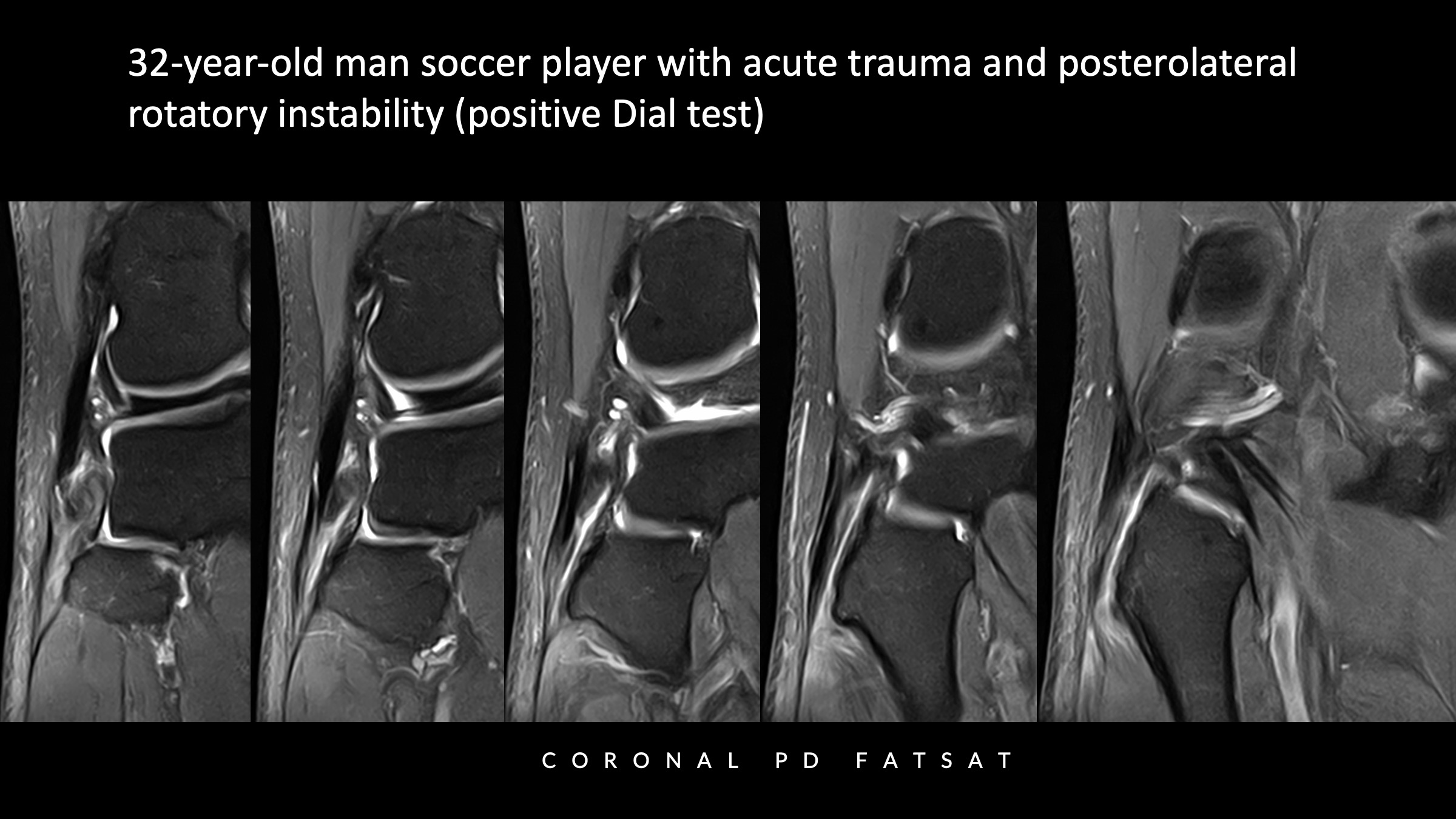
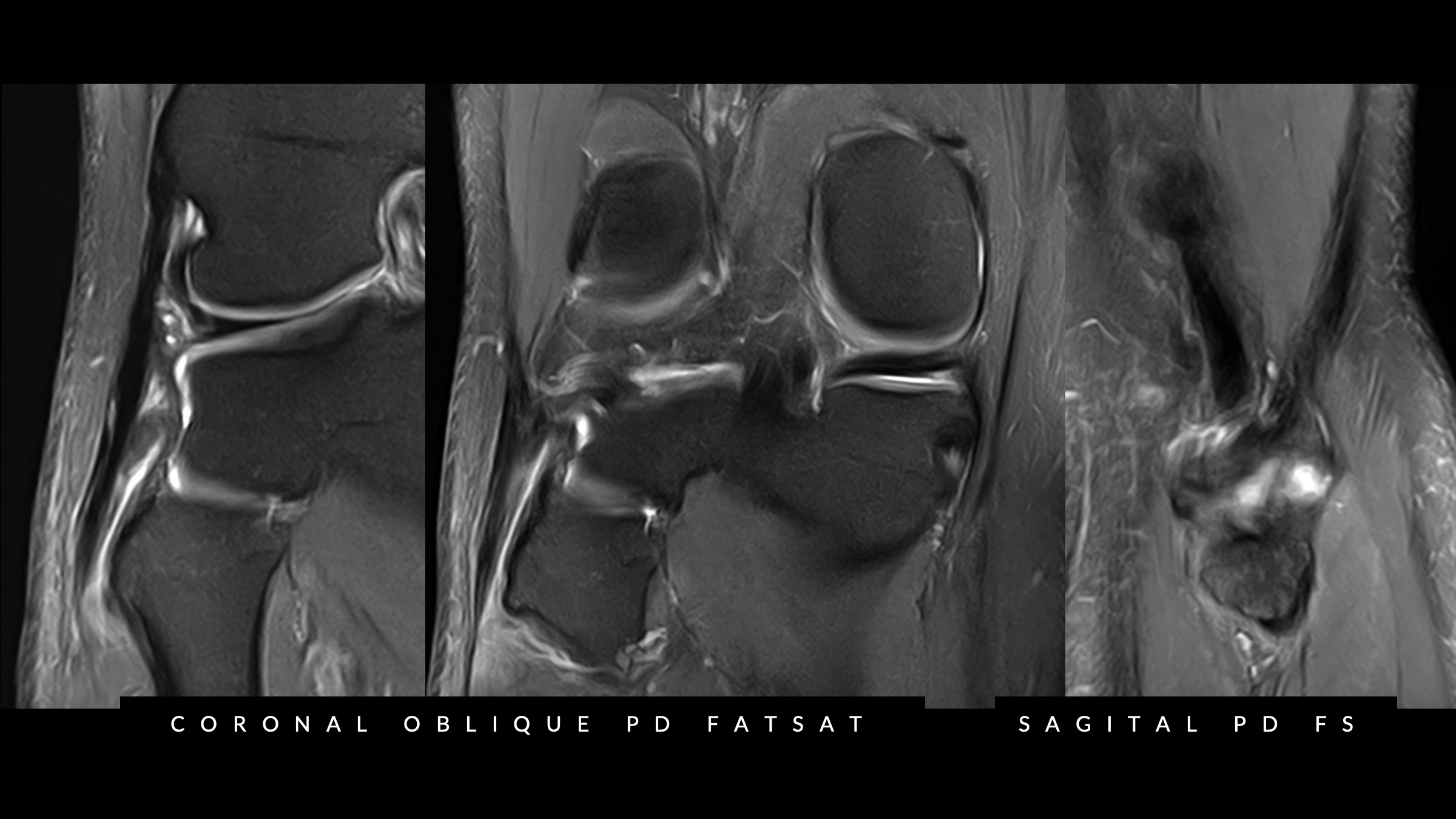
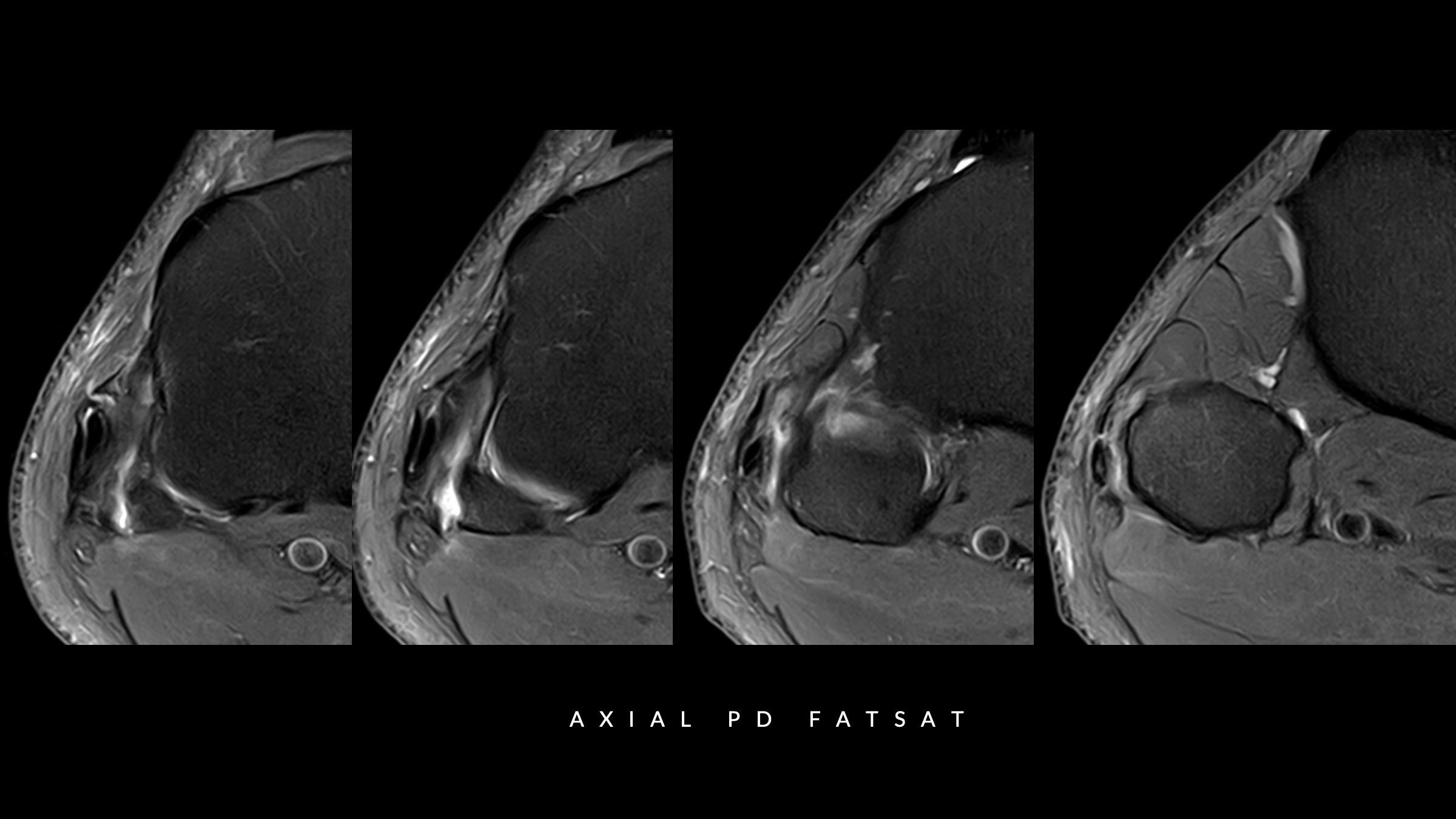
32-year-old man soccer player with acute trauma and posterolateral rotatory instability
Discussion
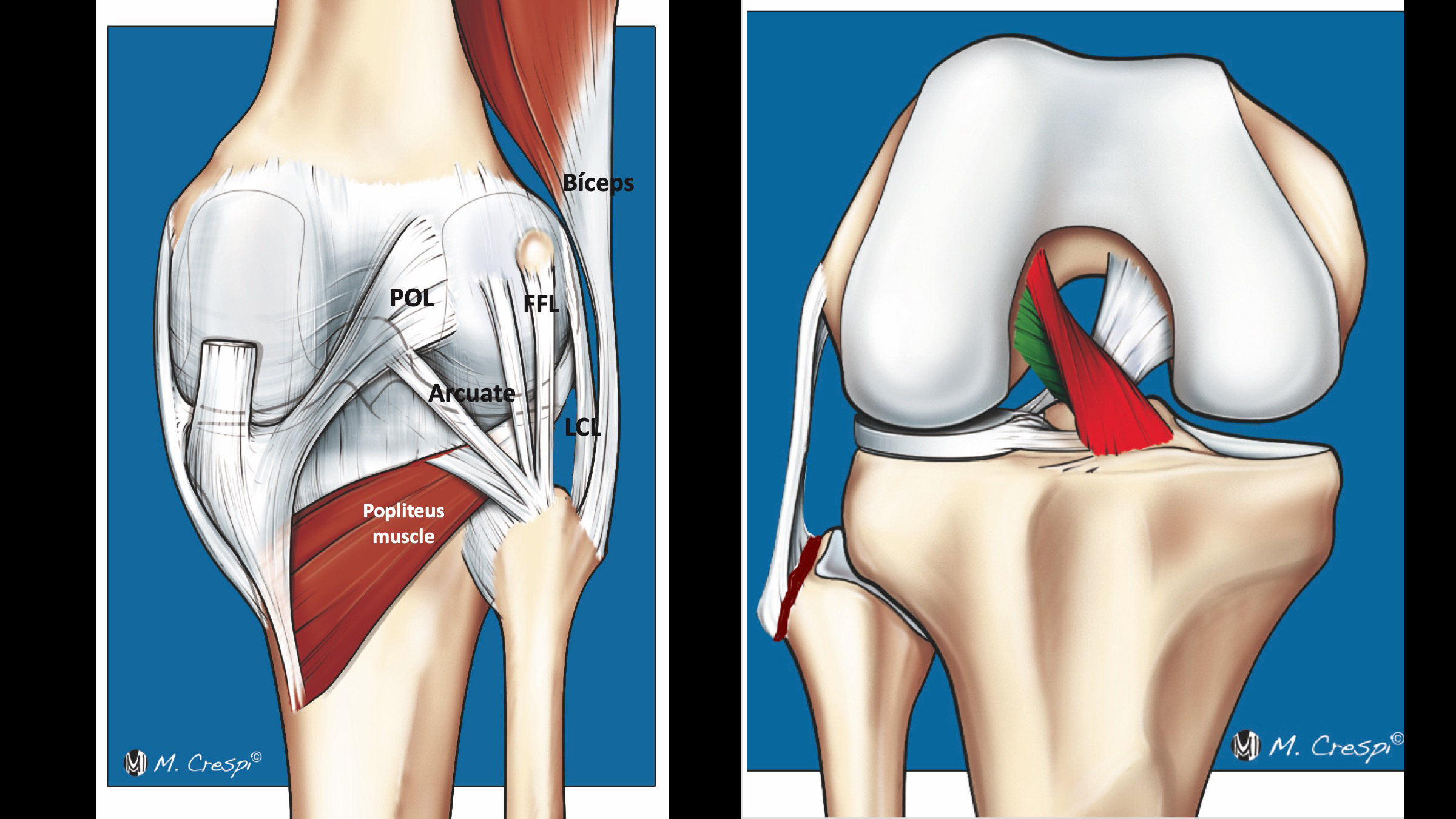
Posterolateral corner (PLC) injuries are rarely isolated (2 to 5.7%) and frequently occur in association with injuries of the cruciate ligaments, and other intra articular injuries. Distal detachment or stripping from peroneal insertion with continuity with the crural fascia are an uncommon injuries.
The lateral collateral ligament (LCL) inserts distally on the upper facet of the fibular head. The long and short heads of biceps femoris tendon (BT) are located posteriorly with most of the distal fibers inserting on the fibular head/styloid. The anterior arm of the short head of the BT inserts onto the superolateral edge of the lateral tibial plateau. The deep fascia of leg, or crural fascia receives an expansion from the tendon of the biceps femoris laterally. Reference article.
Diagnosis
Isolated distal detachment of the lateral collateral ligament and biceps femoris tendon