OCAD MSK
History
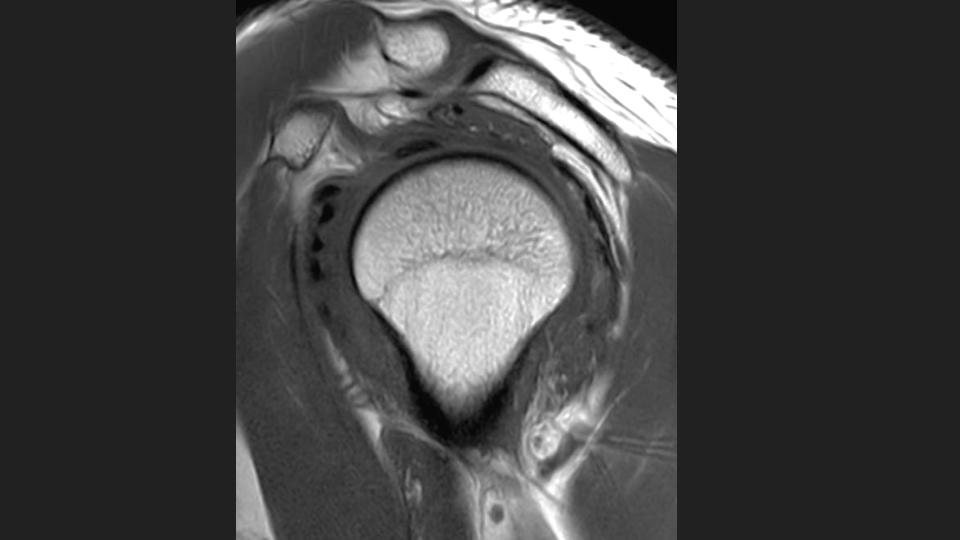
38M 5 months shoulder pain and severely limited range of motion
Discussion
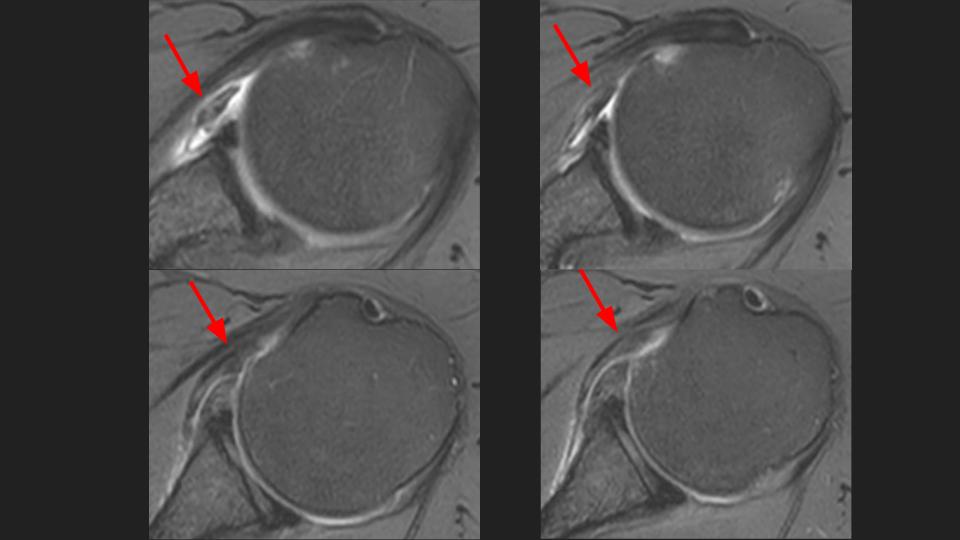
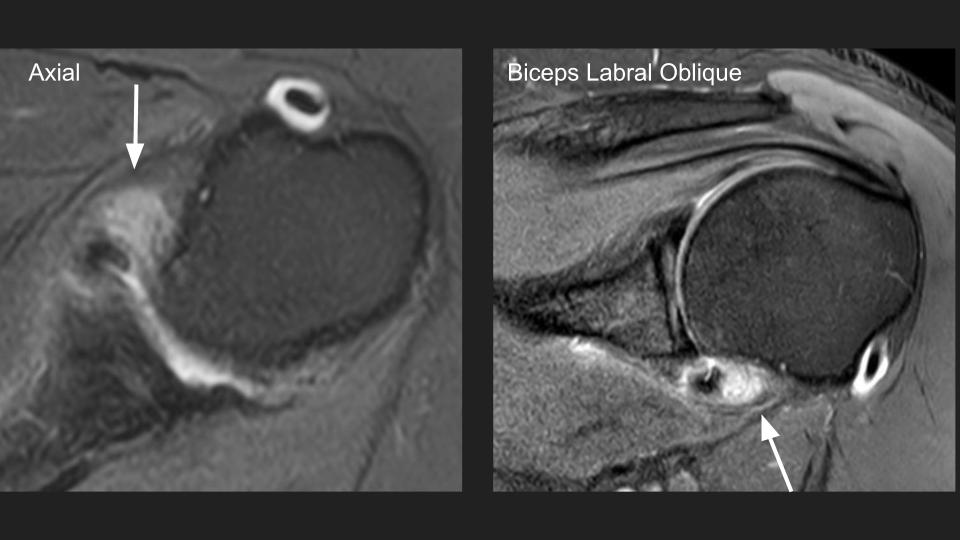
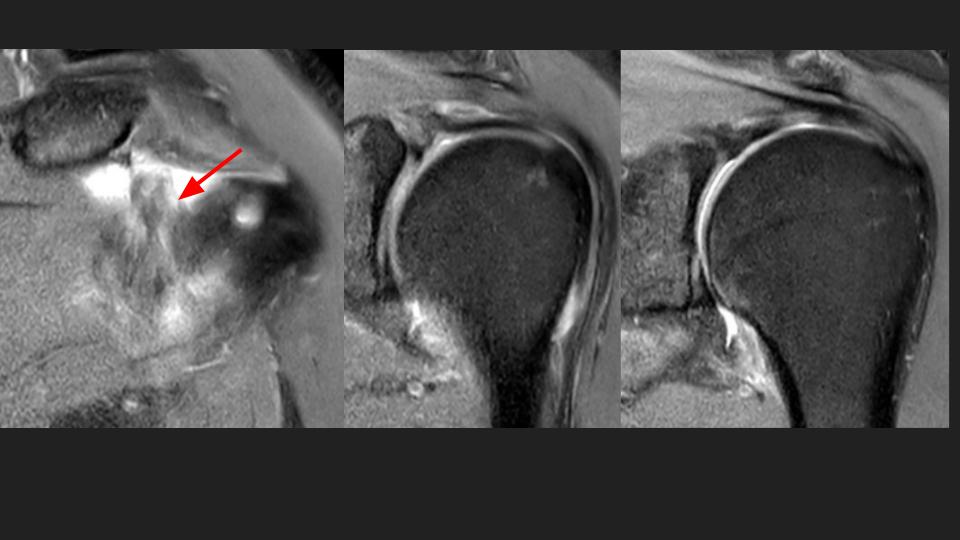
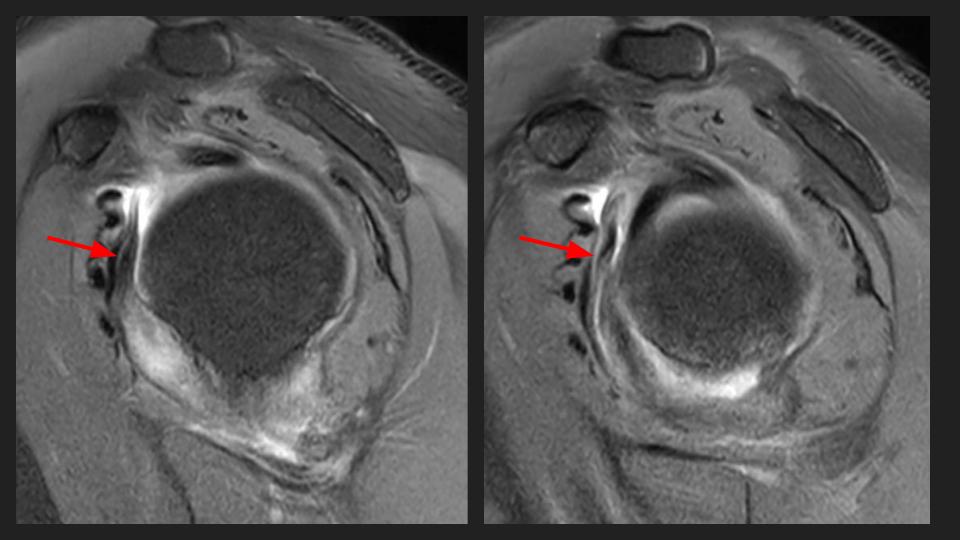
There is nearly circumferential capsular thickening and edema that is most pronounced in the axillary capsule (cuff and labrum are normal). Red arrows indicate the MGHL which is diffusely thickened. I know that it is routinely thickened and resected during arthroscopic capsular release. I have tried to look for it before, but could not find it reliably. Have you seen this on MRI in the context of adhesive capsulitis? The patient age and male gender are not typical for adhesive capsulitis, but it is what it is.
Diagnosis
adhesive capsulitis